HomepageRadial-US

U.S.
20
%
of cats and dogs are homeless
DataSource-USA-1
Pet population
Number of sheltered pets (cats and dogs)
How can you help?
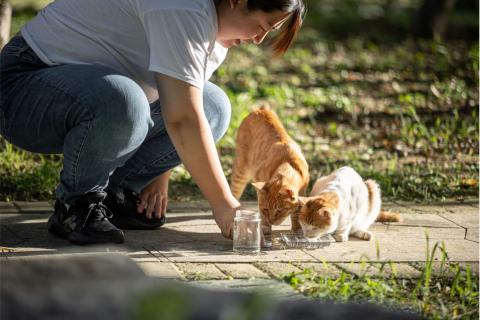
How can you help?
Donate to our programs or partners
Discover a range of programs working to address pet homelessness and learn how you can make a difference.
Get involved
Be a responsible pet owner
Understand how to prepare for and care for a pet. Find out how you can help stray pets.
Check out resources
Be a responsible pet owner
Understand how to prepare for and care for a pet.
Methodology
Data collection
The State of Pet Homelessness Project reviewed 930 sources to select 180+ data points, conducted nearly 30,000 surveys with pet owners and non-pet owners, and interviewed over 200 pet professionals working in the field of pet homelessness.
The Project reflects the state of pet homelessness at a specific moment in time when the research was conducted.
Our data sources
Country
Category
Subcategory
Source

Methodology
Pet Homelessness estimates based on primary and secondary research conducted by Euromonitor International in 2022-2023, and owned pet estimates collected by Mars Consumer Marketing Insights team
Public sample surveys (online and in the field) of pet owners and non-pet owners conducted by Kantar in 2022
Pet professionals, such as shelters and non-profit organizations (NGOs) working in the pet homelessness space
How we did it
Estimating pet homelessness
1
Country data collection
The process for calculating the level of homeless pets in a country starts with gathering data for the local market on the total number of cats and dogs and the number of homeless cats and dogs. Each market is different, so the first step is to identify what data exists for every country. Extensive desk research is used to find resources that we can consider for use in our measure. Examples of the type of information that this can include are census data, industry estimates, regulatory monitoring, and scientific studies.
2
Data validation
The recency, reliability, and robustness of all data sources are taken into account to decide which data sources are suitable for inclusion. Data is validated using several methods.
- The first is to consider multiple data points to provide an independent check that different sources concur to a consistent number using a consistent definition.
- A second check looks at the viability of a data point. For example, it would be highly unusual to have more cats and dogs in a country than there are households, and such data points would be further checked.
- A third way to validate data uses partial data sources. Detailed studies are often conducted at a local level and provide a very accurate measure of a small area. For example, a study conducted for a state or region can be used to extrapolate to a national picture to create upper and lower estimates of pet numbers.
3
Data standardization
Data collected from a range of sources in multiple countries will not follow the same formatting or units of measurement. Data is standardised to allow for ease of understanding of the measure of pet homelessness, allowing the measure to be presented in the same format for all countries. Examples of standardisation include converting data points to be a ‘per capita’ measurement rather than an absolute value for the total population.
4
Homelessness pet calculation
The measure of homeless pets is a simple percentage calculation. Cats and dogs are calculated separately and then a total figure is provided. It is a measure of the number of homeless cats or dogs as a percentage of the total number of cats or dogs.
Understanding the factors impacting pet homelessness
5
Behavioral data collection
Data is gathered using surveys to understand the attitudes and behaviors of a sample of people in each country. A minimum of 1000 surveys are conducted per country, with more surveys conducted to achieve a statistically valid sample for certain countries. In addition to the number of surveys carried out, samples are stratified to ensure responders reflect the age, income, and urbanicity of the population. The surveys capture responses from both pet owners and non-pet owners.
6
Data validation and standardization
Checks are conducted to make sure the survey data does reflect the economic and population data for a country and the responses are not biased to a particular age or income group. Standardisation is applied to data points such as income to draw out an understanding of the distribution of wealth within a country rather than differences in wealth between different countries.
7
Clustering algorithms
To understand what human attitudes and behaviors might be influencing levels of pet homelessness, clustering techniques are applied separately to each country to identify if any patterns of behavior exist within groups of survey respondents.
8
Interpretation and visualization
The combination of data-driven clusters and conversations with pet welfare experts informed three interconnected themes which emerged from the data, highlighting where interventions could help reduce pet homelessness:
- Prevent unwanted unwanted pets
- Ensure sustained care
- Keeping pets in homes
The three themes emerging from the data
Prevent unwanted pets
Large populations of stray pets which can breed at a rapid rate are a huge part of the problem. This, coupled with irresponsible breeding practices, e.g. those that do not pay enough attention to health, temperament, positive early socialization, or to ensuring a good fit with the pet owner, can result in increasing numbers of homeless pets and groups of pets that are difficult to provide sustained care to or match with a home. Our data looks at this significant and critical piece of the challenge.
Reproduction control: spaying and neutering
If pre-roaming or owned pets are able to reproduce unchecked, this can exacerbate the problem by rapidly adding to the population of pets without a home.
Routes to pet ownership
Where people get their pets reveals important insights about the pathways to pet ownership and the proportion of people making a direct impact on homeless pet numbers through the adoption of shelter pets or strays.
Attitude towards street & stray pets
Stray pets interact with humans or remain hidden. Encouraging people to learn about ways to interact with different types of pets can help pets who would benefit from human care get access to what they need.
Ensure sustained care
Helping to provide more homeless pets with responsible loving homes, or the sustained human care they need in the community, is a foundational step in tackling pet homelessness. Achieving it requires an understanding of the key barriers to acquiring or adopting a pet, or accessing veterinary care, as well as facilitating pathways to ownership, and provision of care for community animals, whose home may not be a conventional house but still need access to sustained care. Shelters may provide care for cats and dogs but resources are often strained and, if pets are not adopted to new homes, demand may exceed capacity.
Pet acquisition
Insights into attitudes toward future pet ownership can help highlight the opportunities for pets in need to find responsible, loving homes. This is a foundational step in tackling pet homelessness.
Barriers to pet ownership
Understanding the barriers to owning or caring for a pet can help to facilitate interventions to help people to become responsible pet owners.
Perception of shelter pets
Understanding the perception of homeless cats and dogs can help get pets out of shelters and into loving homes.
Keeping pets in homes
Keeping pets in homes is vital for both pet and owner to benefit from a longstanding bond. Pets are at risk of becoming homeless through being relinquished or abandoned if the pet ownership experience is difficult, or a pet owner can’t access the advice and support they need. Pet owning practices which easily allow pets to stray or become lost can also result in owned pets becoming homeless. Our data looks at issues such as the cost of caring for a pet, common pet care practices and the incidence of lost pets.
Lost pets
Pets are lost more frequently than many may realize, and if they are not reunited with their owner, this can lead to an increase in the homeless population. Keeping pets from straying or getting them reunited quickly is a beneficial objective for pets and the people who care for them.
Rehoming pets
Understanding the potential reasons for people rehoming their pet can guide the efforts of organizations and businesses in supporting pet owners to continue to care for their cat or dog.
See glossary
CountryDetails-United Kingdom
This means 1.16 million out of 24.73 million cat and dogs in the United Kingdom are homeless
In shelters
63.8K dogs
75.3K cats
On the streets
49.3K dogs
970K cats
Read the report
Where does the data come from


5
%
cats and dogs are homeless
3 in 10
people in the UK have lost a cat in the past and only 56% of them ever got their cat back.
See in-depth data
Where does the data come from

MarkersVector-United States

20%
of cats and dogs are homeless
CountryDetails-United States
This means 45.33 million out of 231.8 million cats and dogs in the United States are homeless
in shelters
2.3 million dogs
2.1 million cats
on the streets
5.9 million dogs
35 million cats
Read the report
Where does the data come from?

20
%
of cats and dogs are homeless
Almost 1 in 4
dog owners in the US are thinking of rehoming their pet in the next 12 months, and 1 in 5 of them state it is due to behavioral problems.
See in-depth data
Where does the data come from?

Appbar
State of Pet Homelessness Project
Royal Canin PROActive

Royal Canin PROActive
A program launched by Royal Canin to help dog and cat professionals to run their daily activities sustainably and soundly.
Shelter Animal Veterinary Discount (SAVD)

Shelter Animal Veterinary Discount (SAVD)
Provides discounted veterinary care and support to partnering animal shelters.