Fur-Ever Homes Series: Expert Insights on Tackling Pet Homelessness (Vicky Halls)

August 27, 2024
Fur-Ever Homes Series: Expert Insights on Tackling Pet Homelessness (Vicky Halls)
Head of Unowned Cats at International Cat Care and advisor to the State of Pet Homelessness Project
Share this story
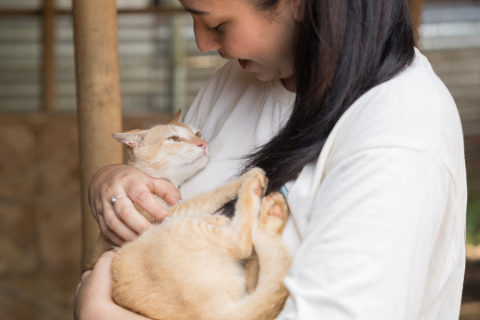
In the second interview of our ’Fur-Ever Home’ series looking at how we can take action to prevent pet homelessness, we sat down with Vicky Halls, Head of Unowned Cats at International Cat Care, to hear more about how we can keep cats in loving homes.
Vicky’s career with cats started in the 1980s when she volunteered for the RSPCA. She then spent over two decades working as a veterinary nurse and in clinical animal behavior before she joined International Cat Care. In her role, Vicky works specifically on projects relating to the welfare of unowned cats around the world. She currently looks after LC, a pre-loved black moggy who had been taken into her friend’s veterinary practice as an unwanted pet. She came to Vicky aged 11 who says she has gone backwards in age ever since!
Why International Cat Care chose to become involved in Mars’ State of Pet Homelessness Project?
VH: We’re a charity that really looks at the bigger picture and is keen to deal with the root causes of issues affecting cats, rather than just the symptoms. We got involved because we know we need to raise awareness about the plight of homeless pets. When you have your own pet it can be easy to forget that not every animal is as lucky and we have to look beyond our own. I believe that if we love the species we share our home with, then we have a moral responsibility to understand the bigger picture. The State of Pet Homelessness Project provides a snapshot of that bigger picture – it asks how we can prevent the situation from getting any worse and what we can do to make a positive difference.
As part of looking at the bigger picture, the project data revealed that over 26% of respondents had experienced losing their cat. What steps can be taken by pet owners to prevent this?
VH: The best thing you can do – and which is highlighted in the data – is to microchip your pet as it’s the surest way it will be returned to you. However, this only works if you keep your details up to date! Lots of cats end up in shelters when they turn up at the vets, but the vet can’t trace down the owners because they have moved house or changed phone numbers.
I also think there’s also a lot of work that needs to be done on advising the public about how to interact with cats in your area. For example, people often assume that a cat is hungry and that you should feed it. What people might not know is that cats are opportunistic feeders and so will always choose to eat! Unfortunately, feeding a cat that isn’t your own can actually confuse a cat who might then get lost. So – my advice is don’t feed a cat you don’t recognize! And if you think there is a stray cat in your area, ask your local vet for advice.
The data also revealed that 16% of people would consider rehoming their pet [cat] in the next 12 months. What can be done to ensure pets stay in loving homes?
VH: It’s worth acknowledging that considering rehoming your pet can be a really sad situation – I believe no one makes that decision without heartache. Firstly, I’d encourage anyone who needs to consider rehoming to reach out as early as possible if you’re in trouble. Shelters are usually very helpful and might be able to assist in various situations, providing information, advice or in connecting you with the right support groups depending on the reasons for rehoming – whether that be cost, behavior or lifestyle for example.
Secondly, I’d remind everyone that your relationship with your cat is two-way. Before you embark on this journey, you need to ask yourself ‘Do I have what is needed to give this cat what it needs to be happy and healthy for the duration of its life?’ This isn’t just about cost – it’s also about lifestyle. Cats can live for 20 years – it’s a huge commitment! Read up on what cats need to thrive – can you afford it? What will you do when you go on holiday? Will you get insurance? Is your home set up for a cat? How will you entertain your cat? When I had my first cat, I went to the library to do my research. Now there’s a wealth of information online where you can find out more about being a responsible pet owner.
Going to the library to read up – that’s brilliant! Where else can pet owners get further advice?
VH: We publish lots of resources on our website icatcare.org and you can always speak to your local homing organizations and vet practices if you need advice. The best advice we can give is to ensure you understand the commitment you are making when you take on a cat so that both of you can get the most out of that relationship.
Vicky Halls, Head of Unowned Cats at International Cat Care and advisor to the State of Pet Homelessness Project shares her insight and advice around keeping cats in loving homes.
Fur-Ever Homes Series: Expert Insights on Tackling Pet Homelessness (Joyce Briggs)

August 17, 2024
Fur-Ever Homes Series: Expert Insights on Tackling Pet Homelessness (Joyce Briggs)
Former President of the Alliance for Contraception in Cats and Dogs (ACCD) and advisor to Mars’ State of Pet Homelessness Project
Share this story
Joyce Briggs, former President of the Alliance for Contraception in Cats and Dogs and advisor to the Mars' State of Pet Homelessness Project shares her insight and advice around preventing homeless pets.
This year we are marking International Animals Day by welcoming you to our four-part 'Fur-Ever Home' series that features interviews with expert advisors for Mars' State of Pet Homelessness Project.
The ambition of the project is to drive more informed and targeted action by providing data and insights and help reduce pet homelessness and ensure they get the care they need. We begin our series with Joyce Briggs, with the Alliance for Contraception in Cats and Dogs (ACC&D).
Joyce has worked at the intersection of animal welfare and veterinary medicine since 1995 and is a long-time believer in sterilization to prevent unwanted litters of cats and dogs. Seeking innovations to make sterilization more accessible led to her leadership role with ACC&D and her role as an advisor for Mars’ State of Pet Homelessness project. At home, she has a big sweet blocky-headed shelter dog called Dexter, and a 15-year-old cat called Phillip, who’s in charge.
One of the key steps to tackling pet homelessness identified in the State of Pet Homelessness Project is to prevent unwanted pets. What in your view can make the most significant impact in this area?
JB: I believe sterilization is the most cost-efficient and humane way to deal with unwanted litters at all levels – for pet owners, communities, society and of course, pets themselves.
Let me share with you a case study to demonstrate the impact of sterilization. In 2006, striving to reduce euthanasia of cats and dogs in the shelters of Portland, Oregon, I helped found a coalition called the Animal Shelter Alliance of Portland (ASAP). Then, the live release rate (i.e the pets adopted, returned to owners after being lost, or transferred to another shelter) from the shelters was 62% - meaning 38% did not leave alive. And 80% of those not making it were cats. The coalition determined that providing low-cost surgeries for cats, for people who could not otherwise afford sterilization, would save the most lives, by reducing intake. A new program: ‘Spay and Save’ launched in 2010, sterilizing 10,000 cats annually for people who met low-income guidelines. By 2014, the program dramatically reduced cat intake, as hoped, and the live release rate climbed to over 90%. That level has been maintained to this day, now around 95%.
That’s a fantastic result of a local initiative. How this can be scaled up around the world?
JB: Community and shelter veterinarians are supplemented by what we call High Volume High Quality (HVHQ) spay/neuter clinics to provide capacity, and yet access to surgery is still quite low. Globally, there is not enough capacity to sterilize all pets born.
That’s why ACC&D exists as a catalyst to develop non-surgical alternatives, in addition to traditional surgical sterilization. When I say non-surgical, imagine a ‘spay shot’. After decades of effort, recent research has moved into a development phase, with a potential product to sterilize female cats with a single injection being evaluated first for the United States via the FDA regulatory channel. That research is being funded by the Michelson Prize & Grants program of the Michelson Found Animals Foundation. ACC&D envisions this, alongside a dog version and other new technologies, expanding the future toolkit for preventing unwanted litters, more effectively using veterinary time, being less invasive for animals and more affordable for pet owners.
It will still take several years to realize this dream and develop equivalent technology for males. We’re so pleased that Mars is a supporter of ACC&D’s work as it seeks to make pet homelessness a thing of the past.
Aside from vets and shelters, what can individual pet owners do to make a difference?
JB: I’m an advocate for trusting people to make the right decisions when provided with the right information and support. If you don’t want a litter, then sterilize your pets and understand the consequences if you don’t. Right now, I’m fostering Cleo, a sweet mother cat with 6 kittens, for a local shelter. Fortunately, the shelter will responsibly sterilize all seven cats before rehoming for my foster, but it could overwhelm a typical pet owner.
There is so much a person or family can do. It can take a village to raise a community of healthy and happy pets. For example, some years ago, I saw a social media post by an older woman, who shared that she’d just moved to the area and her job had fallen through. She was now living in her daughter’s apartment which did not allow pets. She was distraught about the fate of her elderly dog named Mrs Whatsit and put out a desperate plea hoping someone might keep her for 3 months till she could find a job and apartment. I thought, in ‘Petopia’, where I want to live, somebody steps up. And I could be that someone. Mrs. Whatsit joined our family for some months, in fact, Banfield did a complementary first wellness exam. No shelter was asked to rehome an elderly dog. It was so satisfying to help Mrs. WhatsIt and her owner. Opportunities to help are all around!
We all have a part to play – shelters, veterinarians, landlords who could consider pet-friendly accommodation, policymakers who can legislate for pet-friendly cities, pet owners and citizens who might step up in times of need.
Where to look for information on the topics you mentioned?
JB: If you want to know more about the progress towards non-surgical sterilization and contraception, check our website, acc-d.org and that of the Michelson Prize & Grants. If you’re a pet owner or potential pet owner, you should always speak to your local vet about the decision to neuter or sterilize. There’s also great information on pet-friendly cities at Mars’ Better Cities for Pets website.
Discover expert insights on preventing pet homelessness in our ‘Fur-Ever Homes’ series. In this edition, Joyce Briggs, former President of the ACCD, shares her experience and strategies to reduce pet homelessness.
Pawsitive Beginnings: Tips and tricks for welcoming your new pup
April 25. 2024
Pawsitive Beginnings: Tips and tricks for welcoming your new pup
Pet Behaviorist, Mars Petcare
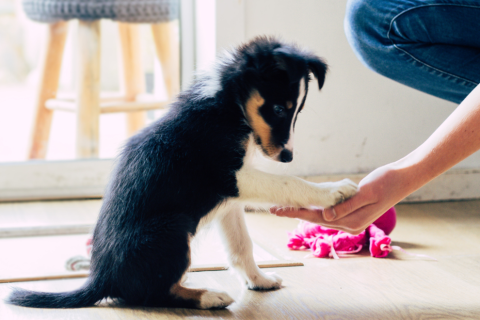
After last month’s Crufts Dog show, Google searches for ‘puppy adoption near me’ surged by 100%. But according to Mars’ recent State of Pet Homelessness Project, sadly one in three pets globally find themselves without a home and, shockingly, over half of the respondents to the survey said they wouldn’t consider adopting a pet from a shelter.
One reason for this is that many people believe they need to re-home an older dog. There are pets of all ages, including many puppies, currently in shelters who also have unfortunate starts to life and are searching for their perfect match.
At Mars, we understand the importance of a ‘pawsitive start’ to a dog-owner relationship in reducing the chance of dogs being put back up for adoption and becoming homeless.
The truth is, change can be stressful for dogs just like it is for humans - a new furry friend doesn’t yet know you, your family, or your house. However, the good news is there’s a lot you can do to make the transition a smoother one.
Preparation Before Arrival:
- Do your research: Before adopting a dog, take the time to thoroughly research and understand the responsibilities involved including breed characteristics, cost, exercise needs and compatibility with your lifestyle.
- Dog-Proof Your Home: Ensure your living space is safe by removing any hazards or items your dog might chew on.
- Essentials: Stock up on necessities like nutritionally balanced dog food, bowls, a lead, collar, a comfy bed, and toys.
- Time Off Work: If you work, it’s a good idea to take a few days off so you can fully devote yourself to getting your dog settled in.
Day One:
- Calm Introduction: When collecting your dog and bringing them home, keep the environment quiet and calm. Space out introductions in the home if you have kids or other pets to avoid overwhelming your new furry friend.
- Start Small: Lots of new places will also be overwhelming for your new pet, instead of offering up the run of the house, just start off with a small area. For example, when you first get home, take your dog out to go to the toilet and then let them settle into one room.
- Establish Routine: Start easing them into a routine from the get-go, so that your dog knows when it’s time for a walk, a play, rest or something to eat.
- Familiarity: If possible, keep your dog’s diet exactly as it was before you picked them up. Not only will this provide familiar tastes and smells, but it’s kinder on your dog’s stomach. After a few days, you can start introducing new food, mixing it in gradually.
Day two and three:
- New House Rules: If you have young kids, keep gently reminding them of the rules – the dog should be approached gently and respectfully (ideally asking the dog to come to them) and is not to be disturbed when sleeping or eating.
- Independence: Start gently getting your dog used to the idea that you won’t be around every single minute. A good way to ease into this is using baby gates so that you can leave your dog alone in a room for short periods while you’re still in the house and gradually build up into longer absences.
The following days and weeks:
- Patience: Your dog’s true personality won’t come out until a few weeks after you bring them home so it’s important to be patient and understanding and keep to the routine you’ve established.
- Don’t be scared to ask for advice: If you’ve adopted, it’s worth contacting the shelter for advice. They have a wealth of information on pets in their care. They are experts in using all the information and resources at their disposal to carefully find the right match between adopters and pets and help the adoption succeed.
- Consider neutering or sterilization. Consult your veterinarian for guidance on the best timing and procedure for your pup as well as general health advice.
- Microchipping: ensure your dog’s safety by microchipping them. It’s a simple procedure that can help reunite you if they ever get lost.
If you’re in the position to extend your family with a new furry member, I’d encourage any prospective pet owner to consider adoption. Not only will it change the pet’s life, but it can be one of the most rewarding experiences for pet parents.
Last, but not least. It’s always worth to make use of relevant and evidence-based information available for pet owners or prospective pet owners. Resources such as SHINE can provide more tips on dog and cat well-being and help build deeper connections between pet owners and their pets.
Dr. Tammie King, a pet behaviorist at Mars Petcare, shares expert advice for new puppy owners adopting from shelters, emphasizing preparation, calm introductions, and patience for a smooth transition.
How can data and insight help homeless pets?

January 26, 2024
How can data and insight help homeless pets?
VP Corporate Affairs & Sustainability, Mars Petcare
Share this story
At Mars we’re driven by our Petcare Purpose: A Better World for Pets. We know that pets bring huge benefits to our lives, and pets deserve loving homes and great care. But around the world, millions of cats and dogs remain in shelters or living on the streets.
We have had programs, partnerships, and initiatives for many years to try and help homeless companion animals. In fact, we have supported around 10 million vulnerable pets over the last three years alone.
But through a conversation with NGO partners on what more we could do to help; it became clear that there was currently no simple way to understand the scale of the problem or to uncover insights at a country level that could help find solutions to the root causes of pet homelessness. Through these conversations what we heard was: yes, practical help is needed, but how can we work together to bring data and insight that can make a real difference and help direct our actions to the right areas?
So, we set out to understand the scale of the problem as a crucial first step. Partnering with leading animal welfare experts and organizations, alongside our own experts in data and analytics and consumer insights, we worked with the help of Kantar and Euromonitor International to develop the State of Pet Homelessness Project.
Through more than 7,700 hours of data work, almost 30,000 public surveys, analyst and expert interviews, and desk research, we compiled a fascinating and detailed picture of pet homelessness. Of course, it’s a hugely complex topic, and the scale and issues that impact pet homelessness differ from country to country, but we hope that by pulling together the best data out there and providing it open-source for anyone who is working in the field we can make a meaningful – and measurable – impact for millions of pets.
We’re excited to share the work. But this is the start of the journey, and hopefully, it will help make a big difference to cats and dogs around the world over the coming years.
Helen Mills, VP Corporate Affairs & Sustainability at Mars Petcare, shares how data-driven insights can help unlock targeted solutions to address the root causes of pet homelessness. Read more here.
DataSource-SA-6
Pet population
Number of stray/street pets (dogs)
Expert interview
DataSource-SA-5
Pet population
Number of stray/street pets (cats)
Exper interview
DataSource-SA-4
Pet population
Number of stray/street pets (cats and dogs)
Expert interview
DataSource-SA-3
Pet population
Number of sheltered pets (dogs)
Expert interview
DataSource-SA-2
Pet population
Number of sheltered pets (cats)
Expert interview
DataSource-SA-1
Pet population
Number of sheltered pets (cats and dogs)
Expert interview